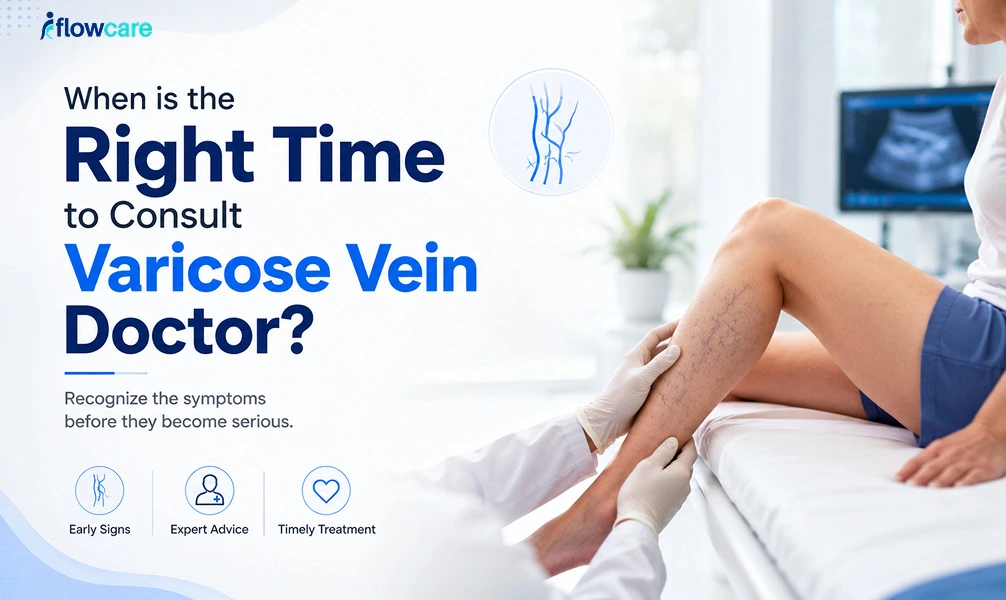
When is the Right time to Consult Varicose Veins Doctor?
When is the right time to consult a varicose vein doctor? If you’re experiencing persistent leg pain, swelling, or visible veins that seem to be worsening, it may be more than just a cosmetic concern.
Ignoring early symptoms can lead to complications, which is why knowing when to seek medical advice is important.
Do Varicose Veins Need Treatment?
Not all varicose veins require treatment, especially in early stages where symptoms are mild.
Delaying treatment can lead to complications like pain, skin damage, or ulcers, making early evaluation important.
If you’re unsure whether your symptoms need treatment, a consultation at FlowCare can help you get clarity before the condition progresses.
When Should You See a Doctor for Varicose Veins?
You should see a varicose veins doctor if home treatments such as exercise, leg elevation, and compression stockings no longer relieve your symptoms or if your condition starts worsening.
At FlowCare, varicose vein specialists help you understand whether your symptoms are normal or need medical attention through a proper evaluation.
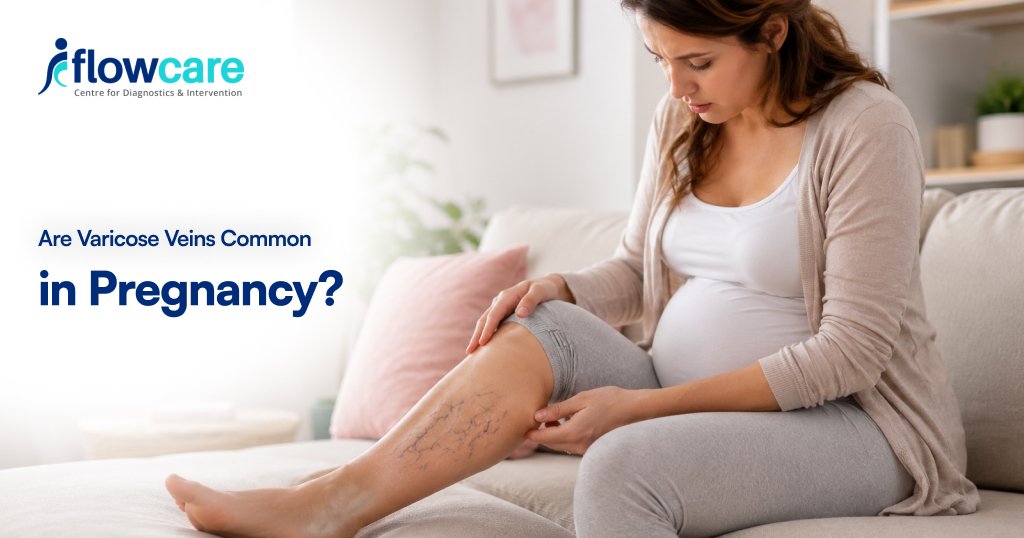
When to See a Doctor for Varicose Veins During Pregnancy?
Varicose veins are common during pregnancy and usually heal on their own after the delivery, but you should consult a varicose veins doctor if you experience the following:
- Severe pain or swelling
- Symptoms like shortness of breath or chest pain indicating blood clot due to varicose veins
- Skin changes like development of sores, rashes or ulcers that don’t heal within a week
- Sudden swelling in one leg or severe pain should not be ignored during pregnancy.
- Discomfort affecting daily activities
What Happens When You Visit a Varicose Vein Doctor?
When you visit a specialist, the doctor will first evaluate your varicose veins symptoms.
In most cases, an ultrasound is done to assess blood flow and identify the affected veins.
Based on the findings, the varicose veins doctor may recommend:
- Compression therapy
- Lifestyle changes
- Minimally invasive treatments like laser treatment (EVLT)
Early consultation helps create a personalized treatment plan and prevents the condition from worsening.
Do Varicose Veins Go Away on Their Own?
No, varicose veins do not go away on their own.
While symptoms may improve temporarily with compression stockings or lifestyle changes, the underlying vein problem usually persists.
When Are Varicose Veins Serious?
Following are the warning signs of varicose veins:
- Persistent leg pain or heaviness that does not improve with rest or compression
- Swelling in the legs or ankles that keeps coming back
- Burning, throbbing, or cramping pain in the legs
- Visible veins becoming larger, more painful, or more prominent
- Skin changes, such as darkening, thickening, or itching
- Open sores or ulcers, especially near the ankles
- Bleeding from a varicose vein
These symptoms may indicate altered blood supply or complications like blood clots and require immediate medical attention.
Stages of Varicose Veins: When Do They Become Serious?
Understanding the stages of varicose veins can help you decide when to seek medical attention.
Early Stage
- Small, visible veins
- No or very mild symptoms
- Occasional leg heaviness or discomfort
At this stage, veins are mostly a cosmetic concern and can often be managed with lifestyle changes.
Moderate Stage
- Noticeable, bulging veins
- Leg pain, heaviness, or fatigue
- Swelling in the legs or ankles
- Burning or throbbing sensation
This is when symptoms start affecting daily life, and medical evaluation is recommended.
Advanced Stage
- Persistent swelling and pain
- Skin changes (darkening, thickening, itching)
- Development of ulcers or non-healing wounds
- Bleeding from veins
At this stage, varicose veins are no longer just cosmetic and require prompt medical treatment to prevent serious complications.
Let’s understand what happens if varicose veins are ignored or left untreated.
What Are Varicose Veins Complications When Left Untreated?
Ignoring varicose vein symptoms can lead to serious complications.
In some cases, untreated veins may increase the risk of blood clots, which can become serious if they travel to the lungs (pulmonary embolism).
Other complications include:
- Venous ulcers
- Skin damage and discoloration
- Bleeding from varicose veins
Early evaluation helps prevent these complications and allows timely treatment.
What Are the Varicose Veins Treatment Options?
Modern varicose vein treatment options are safe and minimally invasive. Depending on the severity of your condition, your doctor may recommend the following:
- Compression therapy for symptom management
- Sclerotherapy for smaller veins
- Laser treatment (EVLT) to close damaged veins
- Other minimally invasive procedures based on your condition
These treatments help improve symptoms, prevent complications, and restore normal blood flow.
Conclusion
Knowing when to see a varicose veins doctor is important to prevent complications and manage symptoms effectively.
While early-stage symptoms can often be managed with lifestyle changes and compression stockings, worsening pain, swelling, skin changes, or ulcers should not be ignored.
Seeking medical advice at the right time can help prevent long-term complications and ensure timely treatment with minimally invasive options.
At FlowCare, our varicose vein specialist evaluates your symptoms and guides you on the right treatment based on your condition.
FAQs
What are the warning signs of severe varicose veins?
Warning signs include persistent pain, swelling, skin discoloration, itching, non-healing wounds (ulcers), or bleeding from veins.
These symptoms indicate that medical evaluation is necessary.
Do all varicose veins require surgery?
No, not all cases require surgery. Many patients can be treated with minimally invasive procedures like laser treatment (EVLT) or sclerotherapy, depending on the severity.
Which doctor should I consult for varicose veins?
A vascular specialist or interventional radiologist is typically the right expert to diagnose and treat varicose veins using both medical and minimally invasive options.
Are varicose veins common during pregnancy?
Yes, varicose veins are common during pregnancy due to increased pressure on the veins.
They often improve after delivery, but severe pain, swelling, or sudden changes should be evaluated.