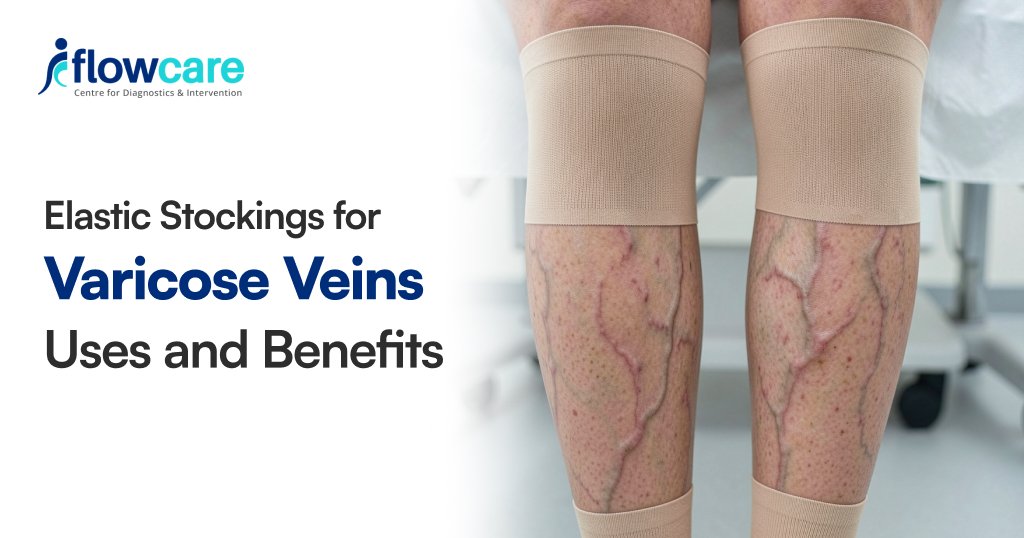
Elastic Stockings for Varicose Veins: Uses and Benefits
Elastic stockings for varicose veins are often prescribed for heavy, aching legs or swelling, but many people find them difficult to use consistently.
As a result, they are often underused or not taken seriously as a part of treatment.
In fact, only 54.7% of patients consider them an essential part of treatment(1).
Understanding how they work and how to use them correctly can make a real difference in symptom relief and overall outcomes.
This article explains what elastic stockings are, their benefits, and how to use the stockings for best results.
What are Elastic Stockings?
Elastic stockings are medical-grade elastic garments designed to apply controlled, graduated pressure to the legs to support blood circulation.
Unlike regular stockings, these are tighter at the ankle and gradually loosen upward, creating a mechanism that assists blood flow.
How Do Compression Stockings Work?
Compression stockings apply external pressure to the legs, which helps the veins function more efficiently.
The pressure helps:
- Supports vein walls and valves
- Prevents fluid leakage AKA swelling
- Improve upward blood flow against gravity
- Reduce pressure inside the veins
As a result, they help relieve symptoms such as aching, heaviness, and swelling.
Source: ncbi(2)
Who Should Use Compression Stockings for Varicose Veins?
Compression stockings for varicose veins are recommended for both symptom relief and prevention in people with increased pressure in their legs.
They may be beneficial for:
- People with early varicose veins symptoms
- Individuals with leg swelling
- Pregnant women to reduce vein pressure and discomfort
- People with jobs that involve prolonged sitting or standing
- As a maintenance treatment after varicose veins treatment
- People at risk of venous insufficiency due to genetic factors
What Are the Benefits of Elastic Stockings?
Here are some of the most common benefits of wearing elastic stockings:
- Elastic stockings help blood flow by gently squeezing the tissues, which helps blood go in the right direction. This, in turn, reduces swelling.
- Reduce Swelling: Stops blood from building up in the tissues, which stops the ankles from swelling.
- Compression stockings stop blood from pooling, which lowers the risk of conditions like deep vein thrombosis and blood clotting.
- Relief from Varicose Veins: Elastic stockings are not a permanent cure for varicose veins but can ease the discomfort and prevent the progression.
- Lessens Leg Fatigue: Medical-grade stockings make the legs feel less heavy and tired by improving blood flow.
Elastic stockings are used for mild cases of varicose veins and even after surgery. You should see a doctor before using them.
Types of Compression Stockings
Depending on the level of compression, length, and purpose, compression stockings for varicose veins can be different.
All types use a gradual compression method that puts the most pressure on the ankle and less pressure as it goes up.
Here is a table that shows different types of compression stockings:
| Type / Class | Details / Pressure (mmHg) | Best For |
| Compression Level | ||
| Mild (Class 1) | 18–21 mmHg | Early symptoms, prevention |
| Moderate (Class 2) | 23–32 mmHg | Varicose veins with swelling |
| High (Class 3) | 34–46 mmHg | Severe varicose veins |
| Very High (Class 4) | >49 mmHg | Advanced disease |
| Style & Length | ||
| Knee-high | Covers up to knee | Daily use |
| Thigh-high | Covers above knee | Veins above knee |
| Tights | Full leg coverage | Extensive veins |
| Ankle socks | It covers ankle only | Short-term use |
| Calf-length sleeves | Covers calf only | Sports use |
| Open-toe | More breathable | Comfort fit |
| Closed-toe | Standard design | Routine use |
| Type & Use | ||
| Graduated compression | Improves blood flow | Swelling, heaviness |
| Anti-embolism | For bed rest | Clot prevention |
| Athletic support | Low pressure | Travel, long-standing |
| Flat knit | Custom, with seam | Severe cases |
| Circular knit | Seamless | Mild to moderate cases |
Source: yalemedicine(3)
How to Choose the Right Elastic Stockings?
Choosing the right kind of elastic stockings depends on the stage and severity of your condition.
The effectiveness depends not just on wearing them, but on selecting the correct compression level, size, and length based on the symptoms.
To choose the right compression stocking, your doctor will start with the compression level starting from mild, moderate, and higher levels.
After deciding the compression level, the correct size is chosen by measuring the ankle and calf in the morning. A poor fit can cause slipping or discomfort.
After this, the right length is chosen; knee-high stockings work for most of the people.
Apart from these other things that you should consider while selecting elastic stockings for better results:
- Use breathable stockings for long hours of wearing.
- Use medical-grade graduated compression stockings
- Follow the doctor’s instructions
- Replace them every 3-6 months
Let’s understand common mistakes people make with compression stockings
Common Mistakes People Make While Using Elastic Compression Stockings
It is important to understand that elastic stockings do not show desired results if not used correctly.
Most people don’t get results, not because the stockings fail but because of common usage mistakes.
Here are some common mistakes to look out for:
- Using the wrong compression level: Too little can give you relief, and too high compression can cause discomfort.
- Choosing the wrong size of stockings: Loose stockings may slip down, leading to decreased effectiveness. Tight ones can cause discomfort.
- Wearing them at the wrong time: Elastic stockings are recommended to be worn in the morning, before the swelling starts. Reducing later reduces the effectiveness.
- Irregular use: Using compression stockings irregularly leads to poor results.
- Incorrect way of wearing: Wrinkles on the stockings increase pressure in certain areas, causing discomfort or skin ulcers.
- Using old elastic stockings: Elasticity reduces over time, leading to improper compression.
How Long Should You Wear Compression Stockings for Varicose Veins?
Compression stockings for varicose veins are usually worn as suggested by your doctor.
These stockings should be put on in the morning, before swelling starts, and worn until the end of the day, especially when you sit or stand for long hours.
Most studies recommend wearing them for at least 8 hours a day, which often corresponds to typical working hours.
Many patients might have to wear them for around 9-10 hours daily, depending on symptom severity and comfort.
The general approach is:
- Wear them from morning until evening
- Use them during active hours (walking, standing, sitting)
In some cases, such as after vein procedures or in specific conditions, doctors may recommend longer or even continuous use for a limited period of time.
Source: pmc(4)
Side Effects and Precautions of Elastic Stockings for Varicose Veins
Elastic stockings for varicose veins are generally safe, but improper use can lead to discomfort or reduce effectiveness.
Understanding the possible side effects and precautions can help you use them safely and get better results.
Common Side Effects of Compression Stockings
- Skin irritation or redness due to prolonged use or friction can irritate skin
- Discomfort or pain, often due to the wrong size or compression level
- Marks or pressure lines on the skin can occur if stockings are too tight or worn incorrectly.
Some of the less common but important side effects:
- Skin damage or ulcers due to uneven pressure can break the skin, especially in older patients, leading to slower healing due to reduced blood supply.
- Reduced blood circulation can act as a compress on the blood vessels, leading to restricting blood flow and reducing oxygen supply to the tissues.
- Patients with thin skin or poor nutrition are more prone to complications and ulcers.
Source: pmc(5)
Precautions to Take While Using Elastic Stockings
- Choose the correct size and compression level
- Wear them correctly
- Put them on in the morning
- Keep your skin clean and moisturized
- Replace stockings regularly
- Consult your doctor before using elastic stockings
- Avoid using the stockings in case of skin infections or arterial diseases
Conclusion
Elastic stockings for varicose veins are a simple, non-invasive way to manage symptoms and support vein health.
Their primary benefit lies in improving blood circulation through graduated compression, which helps reduce leg swelling, pain, and heaviness.
Compression stockings are especially useful for people with early varicose veins, those who stand or sit for long hours, and patients recovering after vein treatments.
When correctly used, these stockings help prevent varicose vein progression and improve overall daily comfort.
However, their effectiveness depends on choosing the right compression level, size, and type.
Summary: Elastic Stockings for Varicose Veins
Here are some of the key takeaways from the article:
- Elastic stockings for varicose veins can help with swelling, pain, and heavy legs.
- They work by using graduated compression to improve blood flow.
- Often used for early varicose veins, jobs that require standing or sitting for long periods of time, and care after treatment
- Available in different types, lengths, and levels of compression depending on how bad it is
- For best results, it must be fitted correctly and worn every day for 8 to 10 hours.
- Using it wrong (the wrong size, the wrong time, or too often) makes it less effective.
- Usually safe, but if you don’t use it right, it could irritate your skin or make you feel bad. Not a cure, but a good first step in treating symptoms and stopping them from getting worse.
- Not a cure, but an effective first-line treatment for symptom relief and prevention
FAQs
How do I know that I need an elastic stocking?
You may need elastic stockings for varicose veins if you have symptoms related to poor blood circulation in the legs.
Common signs include heavy or aching legs, swelling in the ankles or feet, visible varicose veins, and leg fatigue after long periods of standing or sitting.
If the symptoms are persistent, worsening with skin changes or pain, it is best to consult a doctor before starting compression stockings.
What is the difference between compression stockings and compression socks?
Compression stockings and socks perform the same function, i.e., improve circulation by applying graduated pressure.
The only difference between the two is the length. Compression socks reach the knee, while the stockings reach the thighs.
Compression stockings are mainly prescribed in severe cases.
How many hours a day should I wear elastic stockings?
Elastic stockings should be worn as advised by your doctor. In most cases, patients might be advised to wear it for at least 8 hours a day.
In severe cases and depending on the symptoms, some people may need to wear them for 9-10 hours daily.
Source: pmc(4)
Can I wear compression stockings if I have DVT?
You can wear compression stockings with DVT only after consulting a doctor. These are not self-treatments.
They should be used only with medical guidance, with the right compression level and timing.
Can I wear elastic compression stockings if I have neuropathy?
Yes, you can wear compression stockings if you have nerve damage in the legs or arms.
They help ease symptoms by improving blood circulation, and reducing swelling, and alleviating nerve pain.
They are generally safe but should be used under a doctor’s supervision.